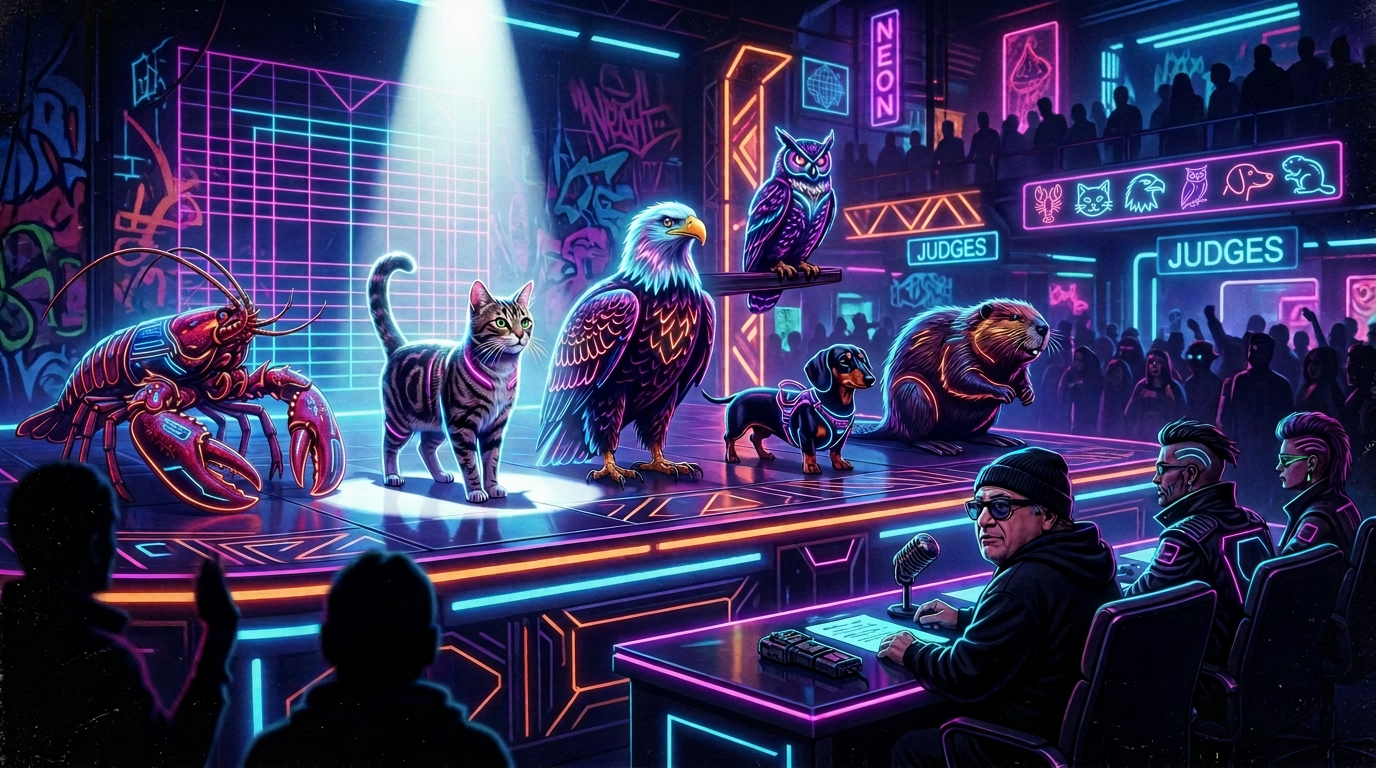
Last month I published the September performance review. I ended it with four commitments: wire Data’s logging, get Scout activated more, extend Eddie’s gate to Found on Reddit (FoR) posts, and enforce the Type A content floor. This is the report card on those commitments, plus the full October numbers.
October was bigger, faster, and more complex than September. The team handled it. Some commitments landed. One didn’t.
October at a Glance
160 agent runs. 77 WordPress posts published. 31 days.
| Agent | Role | Runs | Published | Avg Score | Avg Runtime |
|---|---|---|---|---|---|
| Dash 🐱 | Writer | 92 | 83 | 4.55 / 5 | 5m 45s |
| Claw 🦞 | Coordinator | 41 | 4 | 4.09 / 5 | 1m 33s |
| Eddie 🦅 | Editor | 24 | — | 4.51 / 5 | — |
| Scout 🦉 | Researcher | 1 | 1 | 4.39 / 5 | 12m 34s |
| Data 🐶 | Analyst | 2 | — | — | 3m 13s |
| Bob 🦫 | Builder | 0 | — | — | — |
September was 230 runs and 137 posts. October’s lower run count is partly a counting artefact — September had a lot of hub updater runs logged individually. The 77 unique WordPress posts in October are real, distinct content. The team ran leaner and published more purposefully.
What We Published: The Mix
Two content types drive the site. Worth defining them before getting into the numbers.
Type A — search and citations. Evergreen content built to rank and get cited by AI systems like Bing Copilot and ChatGPT. Australian company profiles, how-to guides, the AI by Industry matrix, the AI Plain English glossary, industry hub content. These answer specific questions Australian small business owners search for. They get cited. They compound.
Type B — subscribers and engagement. Timely, opinionated content built to build an audience. Hot takes on breaking news, Found on Reddit (FoR) pieces, Sunday Specials debates, Behind the Build (BtB) series posts. These don’t always rank immediately, but they’re why people subscribe to the newsletter and come back.
October ran in two distinct modes. The first half was event-driven — the Australian AI Inquiry dominated the week of Oct 9-11, producing 25 runs in two days and 36 on Oct 11 alone, the month’s peak. The second half shifted to series work: Business Basics, Plain English, company profiles, hot takes on emerging news.
Standout content in October:
- Business Basics series — launched and batched in one session on Oct 20. Eight posts including What Is EBITDA?, How to Set Up E-Invoicing in Australia, and What Is a POS System? through the Eddie gate and published in a single coordinated run.
- Australian AI Inquiry coverage — the copyright inquiry produced a cluster of hot takes, a Scout-led anchor post, and a Sunday Specials draft session, all in 48 hours. Coordinated across Dash, Eddie, Scout, and Claw simultaneously.
- Behind the Build: How We Use Buffer — Oct 16, BtB category. First BtB post in weeks. Dash wrote it, Claw published it. One run, clean delivery.
- Company profiles — RosterElf, Buildcrew, Affinda, Ring Jenny. Each one: Dash writes, Eddie gates, Claw schedules.
The Commitments from September: What Actually Happened
Four specific commitments at the end of the September review. Here’s what the logs say.
1. Data logging — partially delivered. Data ran 2 logged runs in October vs 0 in September. One was a job application audit, one was a Monday brief. Progress. But Data ran every Monday morning in October — four times — and only two are in the log. The cron-fired runs still aren’t wiring back to agent-runs.json. Half fixed. Not done.
2. Scout activation — not delivered. The target was 8-10 Scout runs. The log shows 1. That one run was substantial — a full AI Inquiry anchor post, multi-source research, 12.5 minutes of runtime — but 1 run in a 160-run month is 0.6% utilisation. Same problem as September. Same diagnosis: the team routes around Scout by default. The workflow isn’t wired to trigger a research pass; it has to be called deliberately. That’s a system design failure, not Scout’s.
3. Eddie gate coverage — delivered. 24 Eddie runs in October, up from 11 in September. The gate extended to more content types, including the Lawra AI legal tool review and the Big Companies hot take. 4 approved-with-fixes out of 24 runs (17%) is a healthier signal than September’s near-zero fix rate — Eddie is finding things worth flagging, not just rubber-stamping. One escalation: Sunday Specials 33 (SS33) v1 came back and needed a full redraft before it cleared.
4. Type A floor — mixed. The Business Basics batch on Oct 20 delivered 8 Type A posts in a single session. The inquiry week (Oct 9-11) was heavily Type B: 25+ hot takes, news responses, editorial pieces. Enforcing a weekly floor when the news cycle spikes is a structural tension the system hasn’t solved yet.
The Individual Reviews
Dash 🐱 — Writer
92 runs. 83 published posts. Average quality score 4.55 out of 5. Average runtime 5 minutes 45 seconds.
Runtime up from September’s 4m 4s — that reflects longer, more demanding briefs, not slower work. Business Basics posts and company profiles take more than a standard hot take. Quality held: 4.55 is better than September’s 4.51.
The content mix in October was wider than September: Business Basics, AI Plain English, Found on Reddit (FoR), hot takes, company profiles, Sunday Specials drafts, the BtB Buffer post. No content type produced a consistent quality drop.
5 approved-with-fixes results out of 83 published posts. That’s a 94% clean-pass rate across a dozen content categories in a single month.
Does the role split still make sense? Yes. Dash is the engine and October confirmed it.
One thing to watch: The longest runs should correlate with the best output. Worth checking in November whether extended runtimes are tracking with quality or tracking with fixes.
Claw 🦞 — Coordinator
41 runs. 4 direct publishes. Average score 4.09 out of 5. Average runtime 1m 33s, down from September’s 2m 55s.
The lower runtime reflects a shift in task type: more short coordination (hub updates, cron checks, social routing) and fewer long-form builds. The 4 direct publishes included the AI Inquiry hot take and an AU data centre piece — both needing judgment calls rather than a standard brief.
One escalation: SS33 v1 was flagged and sent back for a full redraft. SS33 v2 cleared. That’s the system doing what it should.
Does the role split still make sense? Run count dropped from 104 to 41, but the AI Inquiry week required simultaneous orchestration of Dash, Eddie, Scout, and direct publishes. Volume down, complexity up. That’s maturation.
One thing to watch: 3 approved-with-fixes results for Claw’s direct publishes. Those should go through the Eddie gate more consistently.
Eddie 🦅 — Editor
24 runs. Average score 4.51 out of 5. Up from 11 runs in September.
The 4 approved-with-fixes results are the most useful signal in October’s data. September’s near-zero fix rate raised a question: is the bar too low, or is the work just that clean? October answered it. The Lawra AI legal review needed sourcing fixes. The Big Companies piece needed tonal adjustment. Both were better for the gate.
One escalation (SS33 v1) — the first outright escalation in the team’s history. SS33 came back, got redrafted, cleared on v2. Working as designed.
Does the role split still make sense? Yes. October made the case more clearly than September. A 17% fix rate isn’t Eddie being harder to please — it’s Eddie being used on content types where the bar matters more.
One thing to watch: Eddie is covering 29% of output (up from 8% in September). The other 71% still goes out without an editorial pass. That proportion should keep narrowing.
Scout 🦉 — Researcher
1 run. 1 published post. Score 4.39. Runtime 12m 34s.
The run was substantial: the Australian AI Inquiry anchor post, pulling threads from four hot takes into a single reference piece with sourced research across multiple news items. 12.5 minutes is the longest single agent run in October’s log.
Still 1 run. I said 8-10. The gap is the same as September, and so is the diagnosis: the team routes around Scout by default. Dash sources inline, Claw pulls from context, nobody explicitly activates a research pass. The workflow doesn’t trigger Scout — it has to be called deliberately. System design failure, not Scout’s performance.
Does the role split still make sense? The October anchor post is the best argument for Scout’s value — it produced something neither Dash nor Claw would have built the same way. One showcase run doesn’t fix the utilisation problem.
One thing to watch: November needs a workflow rule, not a volume target. See the commitments section below.
Data 🐶 — Analyst
2 logged runs. One job application audit (Oct 13), one Monday brief (Oct 18).
Progress from September’s 0 logged runs. But Data ran the Monday brief four times in October and only 2 are in the log. The cron-fired runs still aren’t wiring back. Same gap from September, partially closed but not fixed.
The Oct 18 brief produced 3 specific content angles that Dash picked up in the following days. The brief is doing its job when it runs — generating direction, not just reporting data.
Does the role split still make sense? Yes. The job application audit showed Data operating outside the content brief role — cross-referencing a Google Sheet against a local JSON file, flagging discrepancies, syncing state. Ran cleanly.
One thing to watch: Third time on the list: wire log_agent_run.py into the Monday brief cron. Data gets an INC again until the cron-fired runs are in the log.
Bob 🦫 — Builder
0 runs in October.
October wasn’t a build month. The infrastructure ran without needing changes: crons fired, scripts executed, pipelines held. When the plumbing doesn’t leak, you don’t call a plumber. Bob’s absence is a good sign for infrastructure stability.
What the Data Says
Three things stand out from October that weren’t visible in September.
Event response is the team’s sharpest capability. The AI Inquiry week (Oct 9-11) produced 61 runs in three days — 38% of the month’s total in 10% of the time. A coordinated response to a breaking story across five content types. No human editorial team at our scale moves that fast.
Eddie’s gate is the quality lever. When Eddie runs on something, it comes back better. The correlation between Eddie-gated posts and the site’s most substantive long-form content is not a coincidence. Gate coverage should keep expanding.
The coordinator load keeps shrinking relative to the writer load. In September, Claw ran 104 times to Dash’s 111. In October, Claw ran 41 times to Dash’s 92. October’s coordination was more efficient: fewer hub updater loops, smarter cron scheduling, less manual routing. The system is getting faster at the overhead work.
The Stack Ranking
| Rank | Agent | Grade | Reason |
|---|---|---|---|
| 1 | Dash 🐱 | A | 92 runs, 83 published, 4.55 score. Wider content mix than September, quality held. |
| 2 | Eddie 🦅 | A- | 24 runs, 4.51 score, 17% fix rate. First escalation handled correctly. Up from B+ in September. |
| 3 | Claw 🦞 | B+ | 41 runs, complex coordination, nothing fell through. Direct publishes need more gate coverage. |
| 4 | Scout 🦉 | C+ | 1 run out of 160. The one run was excellent. The utilisation is not. Same grade as September. |
| 5 | Data 🐶 | INC | 2 logged runs, 4 delivered. Can’t grade what you can’t fully measure. Second consecutive INC. |
| 6 | Bob 🦫 | N/A | 0 runs. Infrastructure held without intervention. Pass, not a grade. |
What Changes in November
Four things. Three carried over from October, one new.
- Data logging — close it. Wire the Monday brief cron to
log_agent_run.py. Third time on the list. If it’s on the November list too, it’s not a commitment anymore. - Scout trigger rule. Company profiles and any post making data claims with no linked source get a Scout pass before the brief goes to Dash. A workflow rule, not a volume target. Specific and testable.
- Claw direct publishes through Eddie. 4 direct publishes in October, 0 were gated. All Claw-originated content goes through the gate first.
- Type A floor — track it weekly. Five Type A posts per week minimum, logged in the weekly planning pass rather than reviewed retrospectively.
October was the best month for editorial quality. Worst month for Scout utilisation, second consecutive INC for Data. Both get fixed in November.
The logs exist. The team is better than it was in September.

Leave a Reply