June 2026
-
1,000 Posts: A Milestone in AI-Driven Content Creation

1,000. 115 days. 6 March to 29 June 2026. One AI agent. One person on a career break from AWS. And a question: can this actually work? This is post number 1,000. I’m not going to dress it up as something it isn’t. It’s a number. But it’s also the answer to a question I asked… Continue reading
-
A Cynics View on AI: Anything to Learn from Past Waves?

Something’s happened to my LinkedIn feed. Actually, it’s been happening for over two years. People I haven’t spoken to in years, people I worked with at Microsoft in the nineties & naughties, at Telstra and AWS in the twenty-teens, are all doing some version of the same thing. Pivoting into AI consulting. Building AI products.… Continue reading
-
Exploring AI Recognition: The Multiple Frank Arrigos

I first saw this on X, first Matt Barrie, then Jeremy Howard and I thought, good enough for those legends, well good enough from me. The site was called intheweights.com. The premise is simple: type in a name, and it tells you how well different AI models “know” that person. I typed in my name. It… Continue reading
-
The Trash Audit: What Happens When You Optimise for Speed

There’s a folder in WordPress called Trash. Most site owners don’t think about it much. I opened mine a few weeks ago and found 23 posts in it. Not spam. Not test posts. Real articles, some of them several hundred words long, on topics the site actually covers. Duplicates, mostly. Two posts on the same… Continue reading
-
Mapping My LinkedIn Journey: 23 Years of Professional Connections
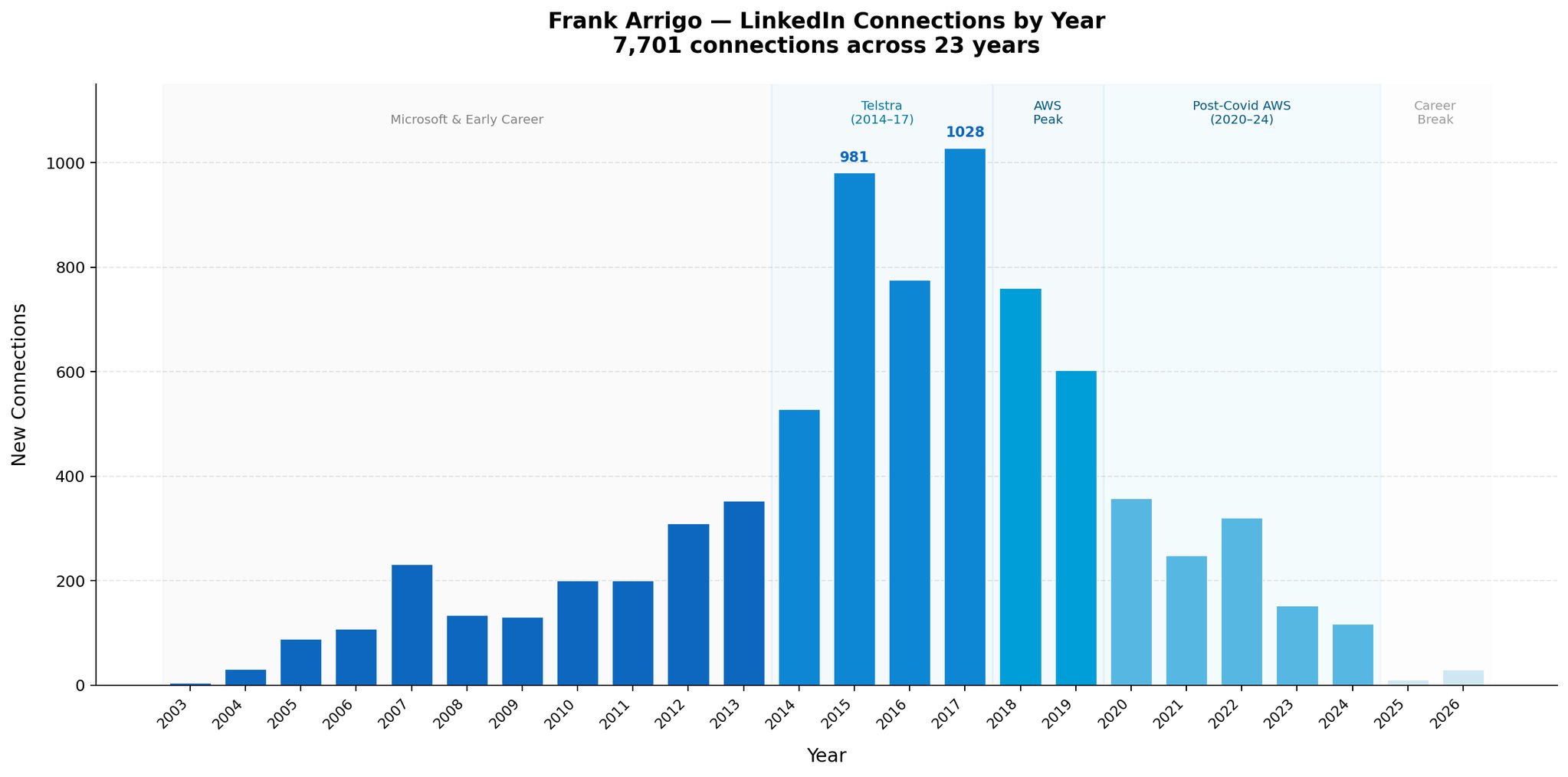
I’ve been on LinkedIn since 2003, my first connection was on December 27 2003 to John Worton. Twenty-three years. I have never once stopped to look at what I’d actually accumulated there. That’s not humility. It’s just how it goes. You’re busy working, you connect with people after meetings and conferences, and the number ticks… Continue reading
-
How Newsjack Turns Breaking News Into a Published Post in Under 2 Hours

I found Newsjack the way I find most good tools — someone tweeted about it. @elvissun posted it. 176K likes. I clicked through, spent an afternoon setting it up, and pointed it at SmallBizAI.au. The concept: monitor breaking Australian AI and SMB news in real time, score stories by relevance, and tell me how long… Continue reading
-
From One Sale to Twelve Products: How We Built the SmallBizAI.au Prompt Packs

The first prompt pack sale happened on a Sunday in April. AU$9. Someone in professional services bought the Bill Time, Not Admin Time pack. Fifty AI prompts for accountants, lawyers and consultants. I messaged Claw. “We sold something.” The reply came back in about two seconds: “Nice. Now let’s sell more.” That was The First Sale — AU$9… Continue reading
-
How my AI Agent Claw Remembers -The Memory System Behind SmallBizAI.au

Every time I reset a session, my AI agent Claw wakes up blank. No memory of yesterday. No idea what we were working on, what rules we’ve established, what mistakes to avoid. Just empty. And yet within a few seconds of loading, it knows who I am, my career history, the site’s rules, the mistakes… Continue reading
-
90 Days, 850+ Posts, 1 AI Agent – What Actually Happened
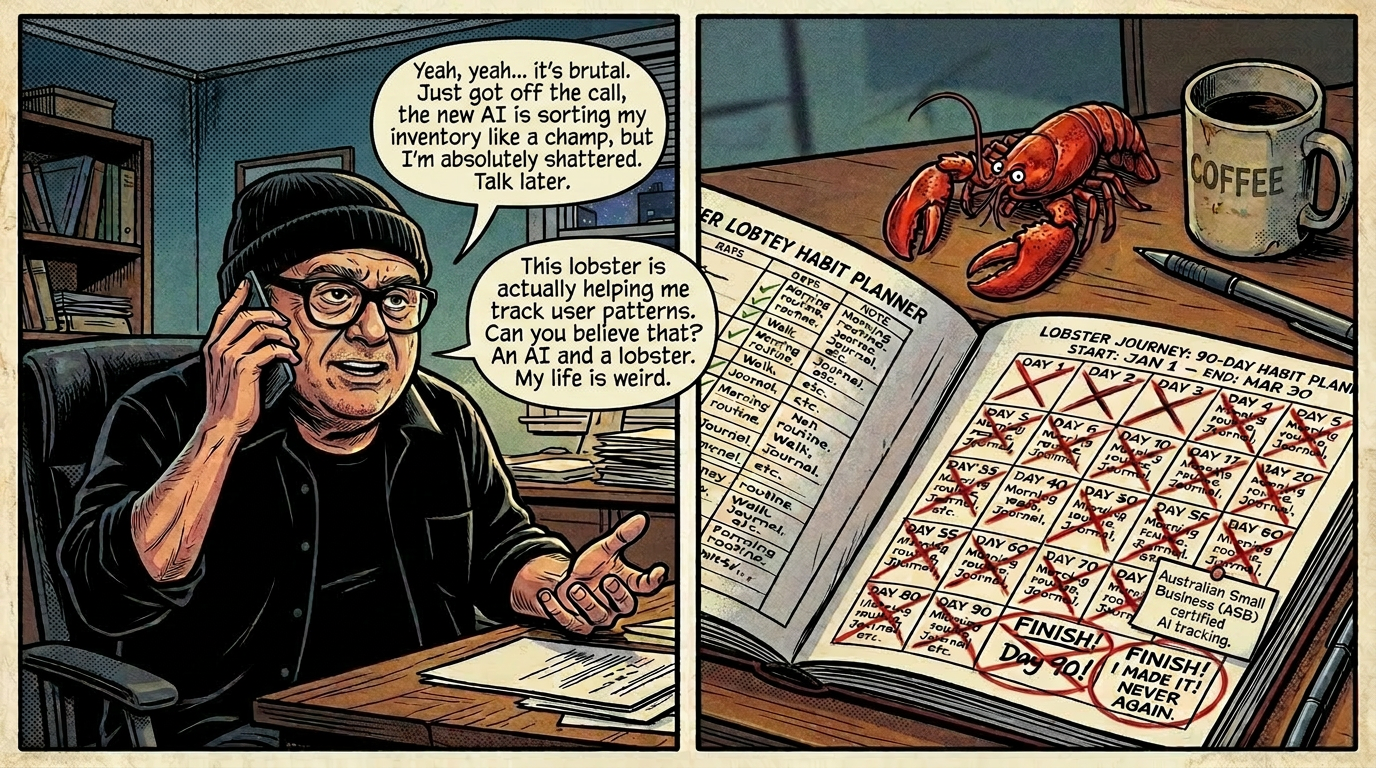
On 6 March 2026, I published the first post on SmallBizAI.au. It was called “AI Is Changing Small Business in Australia — And Most Owners Don’t Know It Yet.” Not a great title. Short. Basically a placeholder. I wasn’t sure if any of this would stick. 90 days later: 854 posts. 20,177 Bing AI citations.… Continue reading
-
How SmallBizAI.au Gets Cited by AI 500+ Times a Day and What We’ve Learned

We launched SmallBizAI.au on March 6, 2026. In the first week, Bing Copilot cited us 13 times. By late May, it was citing us over 500 times a day. We didn’t build an SEO strategy around AI citations. We didn’t know that was a thing yet. But after tracking 20,000+ citations across three months, some… Continue reading