Meet the SmallBizAI.au Mascots: Australia’s AI Animal Kingdom
Posted: May 8, 2026 Filed under: smallbizai.au | Tags: artificial-intelligence, aussie animals, technology Leave a commentI didn’t set out to build a zoo. It kind of just happened.
SmallBizAI.au is at 690+ posts now. Nine content hubs. Forty-one industries. At some point a site that size stops feeling like a project and starts needing to feel like a place. So Claw 🦞 (my AI assistant) and I started building mascots.
That was a few weeks ago. It just started with me wanting to create a favicon for the site. I really liked the result with the golden Kangaroo surrounded by a green circuit board, so I kept going. There’s now 30 Australian animals, most with a job to do.

Why animals?
Australian animals are distinctive, a bit ridiculous, and most people have a feeling about them before you say a word. The Platypus is already doing something weird and interesting. The Shark is already telling you this section means business. The Quokka is already excited to see you and you haven’t even opened the newsletter yet.
They also made the site distinctly Australian without having to say it. Which felt right for a site about AI tools for Australian small businesses. Plus, it’s a bit of fun.
How we built them
I started with Poke, an pretty handy AI agent which you can text, which connected to Canva which was then used to create, iterate, and resize images. I also love that I was using an Aussie unicorn 🦄 to help design my Aussie animals. .
The brief was identical for every mascot:
Minimalist line art [ANIMAL], [POSE/ACTION]. Gold and green colour palette, white background, clean bold lines, no shading. Logo illustration style – [CHARACTER TRAIT that fits the role].
That’s it. The consistency comes from holding those constraints across all 30. Swap in the animal and the character note, and you have the brief.
The process was a proper back-and-forth. I would start with the initial brief and I would get back a few concepts. I would then reply what felt off , such as “the Platypus looks like a beaver”. We (Claw🦞and I) would refine the brief, and go again. Some came out right first go. Others took a few more attempts. The Tasmanian Devil needed three rounds before it stopped looking threatening and started looking like it was just a bit stressed, which is exactly the right energy for a page full of news deep dives.
Total cost: zero. Which still surprises me every time I think about it.
The Mascot Menagerie
Twenty One are deployed and on duty:
- 🦘 Kangaroo : Favicon + homepage. The brand anchor. The one everyone sees first. It’s done the rounds.
- 🐨 Koala (reading) : /start-here/ for people new to AI for business.
- 🐨 Koala (with tablet) : /topics/ browsing the full content library.
- 🦜 Kookaburra : /how-to/ problem-based how-to hub. The one that knows the answer.
- 🐨 Wombat : /all-how-to-guides/ every how-to guide, indexed.
- 🪶 Lyrebird : /automate-your-business/ the automation hub. Lyrebirds mimic everything, which seemed right.
- 🦈 Shark : /compare-tools/ side-by-side comparisons. No warmth, just verdict.
- 🦎 Goanna : /industries/ browse by industry. Covers a lot of ground.
- 🦅 Eagle : /australian-ai-companies/ 200+ AU company profiles. High vantage point, sees everything.
- 🦆 Platypus : /sunday-specials/ bull & bear debates each Sunday. The Platypus is already arguing both sides of its own existence.
- 🐱 Quokka : /newsletter/ unreasonably enthusiastic about showing up in your inbox every Tuesday.
- 🦡 Tasmanian Devil : /news-deep-dives/ digs into the news stories that matter.
- 🦔 Echidna : /all-posts/ spiky, thorough, covers everything.
- 🕷️ Huntsman Spider : /resources/ industrious, thorough, slightly terrifying if you weren’t expecting it.
- 🦜 Cockatoo : /contact/ loud, opinionated, wants to talk, and we can hear you.
- 🐊 Croc : “Snappy” dashboard. He’s on a private page, may go public one day.
- 🐙 Octopus : /tools/ eight arms, eight tabs open at once.
- 🦎 Blue-tongue Lizard : the 404 page. Lost? The Blue-tongue is here. It is also not impressed.
- 🐦 Bowerbird : Monthly Digests. Collects the best of the month and presents it beautifully.
- 🐸 Green Tree Frog : /start-here/ secondary. Cheerful. Adaptable. Good at showing up.
- 🐇 Bilby : /case-studies/ rare, distinctive, worth seeking out.
The Waiting Room
Nine more are built and ready, waiting for their pages to be built. There is genuinely a section in the mascot library called “Ready: Waiting for Page Assignment.” I just call it the waiting room. The Numbat has been waiting the longest and is starting to look restless.
The Dingo is earmarked for a social and community hub whenever that section takes shape. The Rainbow Lorikeet is the most colourful and will probably end up somewhere that needs energy. The Cassowary is waiting patiently, which is out of character.
What surprised me
The mascots changed how I think about building the site. Every new hub now starts with the question: “which animal?” It’s a useful design constraint. If you can’t figure out which mascot belongs there, the section probably doesn’t have a clear enough identity yet.
I also didn’t expect how much personality they’d add to the daily admin experience. The Quokka shows up in the newsletter section. The Croc is on the “snappy” internal dashboard. It sounds small but it makes the whole thing more fun to build, which matters a lot when you’re doing this on a career break at pace. Did I mention it’s also fun?
The full library
All 30 are catalogued at smallbizai.au/mascots/ active, ready, and backlog. Including the ones whose pages haven’t been built yet. We’ve made it that they may make an appearance on the site’s home page! The Numbat has been told it’s worth the wait.
The First Sale — AU$9 and What It Meant
Posted: May 4, 2026 Filed under: smallbizai.au | Tags: ai, artificial-intelligence, smallbizai.au, technology, writing Leave a commentOn a Sunday in April, my phone buzzed with a Gumroad notification.
Someone had bought the AI Prompts for Professional Services pack. Nine Australian dollars.
I’d spent a few weeks building SmallBizAI.au. At that point it had around 650 posts, 40-odd newsletter subscribers, and had cost me a few hundred dollars in API credits and hosting. I wasn’t doing this for money — I’m on a career break. But this was different.
Someone found the site, read enough to trust it, pulled out their card, and paid nine dollars for something I made.
That’s not revenue. That’s proof.
Here’s what I’d built: a prompt pack for accountants, lawyers, and consultants. Fifty copy-paste prompts covering client intake, proposal writing, meeting prep, and client updates — the tasks that eat billable hours. Priced at AU$9. Low enough that a sole trader wouldn’t think twice. High enough to filter for people who’d actually use it.
The buyer is in professional services. They found the pack on a Sunday and bought it. I don’t know whether the prompts saved them any time. But they chose to pay for something on a site that had been giving everything away for free.
That matters.
I’ve spent most of my career in technology, forty years across Microsoft, Telstra and AWS, building things where success is measured in millions of users and billions in revenue. The metrics were always big.
AU$9 is not a big metric.
Career breaks reset your sense of scale in useful ways. Nine dollars from a stranger on the internet, for something you built with your own hands, in a domain you care about — that hits differently. It’s not a Series A. It’s not an enterprise contract. It’s cleaner than both.
It means the thing works.
SmallBizAI.au exists because Australian small businesses are being underserved by generic AI content. Most of what’s out there is written for US audiences, priced in USD, and assumes tools that don’t work here. Fair Work isn’t a thing in Kansas. GST isn’t VAT. Xero is everywhere in Australia and barely mentioned in American AI guides.
The site covers the Australian angle specifically: local pricing, local tools, local compliance. Whether AI can actually help a café owner in Fitzroy or a bookkeeper in Fremantle. Not theory — specific, practical, AU-focused.
Hundreds of posts. One sale.
The ratio sounds bad. It isn’t. Search traffic takes months. Newsletter lists grow slowly. That first sale didn’t come from a viral post or a paid campaign. It came from someone searching for exactly what I’d built, finding it, and buying it.
That’s how it’s supposed to work.
There are now six products in the Gumroad store. Prompt packs at AU$9 each — for tradies, hospitality, allied health, professional services. An AI Tools Comparison Guide for AU$15. A 200-prompt pack for AU$19.
None of this replaces a salary. That’s not the point. The point is building something that earns trust through useful content and eventually converts that trust into revenue. Slowly. Deliberately.
Someone started that. At AU$9 a time.
If you run a professional services business: AI Prompts for Professional Services] — AU$9.
And if you’ve used any of the packs and have feedback on what worked (or didn’t), I’d like to hear it.
Sources
SmallBizAI.au Resources page — all Gumroad products and a bunch of free downloads and guides as well.
This is part of an ongoing series about building SmallBizAI.au in public. Also published at SmallBizAI.au.
6 Weeks, 666 Posts, 1 AI Agent: What I Actually Learned
Posted: May 1, 2026 Filed under: Geek, Personal, smallbizai.au | Tags: ai, artificial-intelligence 2 CommentsSix weeks ago, I started a content site while on a career break.
I wasn’t planning to write hundreds of articles. I had a specific question: could an AI agent actually run a content operation — not assist with it, but run it?
The answer, six weeks and 666 posts later, is: mostly yes. With caveats.
What the agent actually does
Every morning at 8am, an AI agent publishes a news recap covering AI developments relevant to Australian small business. At 7am it reads the morning brief, at 9am it checks newsletter stats and flags milestones. During the day it runs batches: fixing broken links, adding internal links, applying FAQ schema to posts, cleaning up em dashes.
On Fridays it runs a full SEO review — pulls Google Search Console data, identifies CTR opportunities, and sends a summary to Telegram.
It built over 200 profiles of Australian AI companies. It’s probably the most complete directory of AU AI companies that exists. It did that by researching each company, writing a structured profile, publishing it, and adding it to a master guide page — all without me having to do anything except occasionally fix mistakes.
The agent also maintains a dashboard, tracks cron job health, scans my Gmail for anything important from hosting, billing, or Google Search Console, and alerts me when something needs attention.
I mostly direct it. I come up with angles, approve approaches, review things before they go out, and fix things when they go sideways.
What I got wrong early on
In the first few weeks I let the agent publish as fast as it could. Some days that was 40-50 posts. It felt like momentum.
It wasn’t. The posts were thin. The internal links were incomplete. Google didn’t trust the site, and rightly so. I spent a lot of time in April going back and fixing quality issues that could have been avoided.
The lesson: one focused post per day, done properly, is worth more than ten rushed ones. The agent now follows a daily minimum — one how-to or automation guide, plus the automated news recap. That’s it. Everything else is upside.
Bing AI noticed before Google did
The most surprising metric has been Bing AI citations. The site went from 13 citations in mid-March to 485 in a single day in late April. Total: over 4,200 citations across 115+ pages.
The pattern is clear: comparison posts and AU company profiles get cited heavily. The Stripe vs Square vs Tyro comparison has 289 citations. The Flare HR profile has 512. Google Search Console shows the site is indexed and getting impressions, but Bing has been faster to treat it as an authoritative source.
This lines up with something we’re now calling Answer Engine Optimisation — structuring content to be cited in AI-generated answers, not just ranked in traditional search. The comparison and profile format works well for this.
The $9 sale
Six weeks in, someone bought an AI prompt pack for professional services. A$9. Thanks buddy!
It sounds small. It wasn’t. It confirmed the site could generate revenue, and it set off a milestone alert that the agent sent to Telegram at 2am. I saw it in the morning and genuinely celebrated.
The conversations that matter more than revenue right now
A former AWS colleague saw a LinkedIn post and reached out. His entire client base is SMEs. He’s referring people to the site. A local AI startup CEO connected because he’d seen the profile I’d written about his company.
These are the early signals that matter. Revenue will follow reach. Reach comes from being useful and being visible in the right places.
The honest state of play
666 posts. 40+ newsletter subscribers (70%+ open rate on the last issue). 4,200+ Bing AI citations. A$9 in revenue. One very enthusiastic AI agent.
It’s not a business yet. It’s a foundation. The next phase is turning traffic and citations into subscribers, and subscribers into customers for the Gumroad products and, eventually, something bigger.
The experiment is working. The question now is whether the foundation scales.
SmallBizAI.au is a practical AI resource for Australian small business. If you want to follow along, the newsletter goes out every Tuesday.
Sources
- SmallBizAI.au — site stats as of 1 May 2026
- Bing Webmaster Tools — AI citation data, 18 March – 30 April 2026
- Google Search Console — indexing data, 15 March – 30 April 2026
Can One Person on a Career Break Outproduced a Team of 8?
Posted: April 24, 2026 Filed under: Geek, Personal, smallbizai.au | Tags: ai, artificial-intelligence, technology 1 Comment
I had coffee with a former colleague recently. He runs a business focused on providing comprehensive services to business owners — with a dedicated team working across content and service delivery.
He looked at SmallBizAI.au and said our content was better than what his team had produced.
I’ve been on a career break since leaving AWS in 2024.
That gap deserves an explanation.
The Site Isn’t Really a Site
SmallBizAI.au has 639 published posts. 208 Australian AI company profiles. Nine content categories. A newsletter with a 90% open rate. Six Gumroad products. A daily news post. A Sunday series. And a coverage area that spans 100+ industries.
I didn’t write most of it this week. A lot of it ran while I was having coffee.
Here’s what actually happened while I was out:
- The morning brief landed in my Telegram at 7am with overnight news, today’s weather, content opportunities, and SEO flags
- The daily news cron fired at 8am, pulled from 20 RSS feeds, scored stories for Australian relevance, picked the best five, and published a post
- The internal link sweep processed 50 posts, found relevant anchor opportunities, and added links automatically
- The em dash cleanup script fixed AI writing patterns across another batch of posts
- The broken link fixer ran at 11am, processed 30 posts from a queue, and applied known URL replacements
None of that needed me. It just happened.
What “Agentic” Actually Means
There’s a lot of talk about agentic AI right now. Most of it is abstract.
The concrete version looks like this: 31 scheduled jobs running on a server, each doing a specific task, each reporting back. Some run daily. Some run weekly. Some run once a month. The whole thing costs less than $10 a day in API calls.
The tasks aren’t glamorous. Fix broken links. Update post counts. Sweep for missing alt text. Refresh the sitemap. Check newsletter subscriber milestones. Run the SEO review. Generate the Monday report.
But the cumulative effect is a site that maintains itself. Every day it gets a little cleaner, a little better linked, a little more optimised. I don’t have to remember to do any of it.
Claw Isn’t a Chatbot
The AI I work with — I named it Claw 🦞 because it’s OpenClaw— isn’t a tool I query. It has a memory system, a soul document, a personality, and persistent context about the business.
It knows that our content edge is the Australian angle. It knows to run the avoid-ai-writing skill before publishing anything. It knows the newsletter sends on Tuesdays at 6:30am. It knows the people I know, and gives me insights before I meet them.
It remembers because I told it to write things down. It has daily memory files, a long-term MEMORY.md, project files for every content series, and a dashboard that updates nightly with live stats.
When I start a new session, it reads the relevant files and picks up where we left off. No briefing required.
That’s different from a chatbot. A chatbot answers questions. Claw manages a business with me.
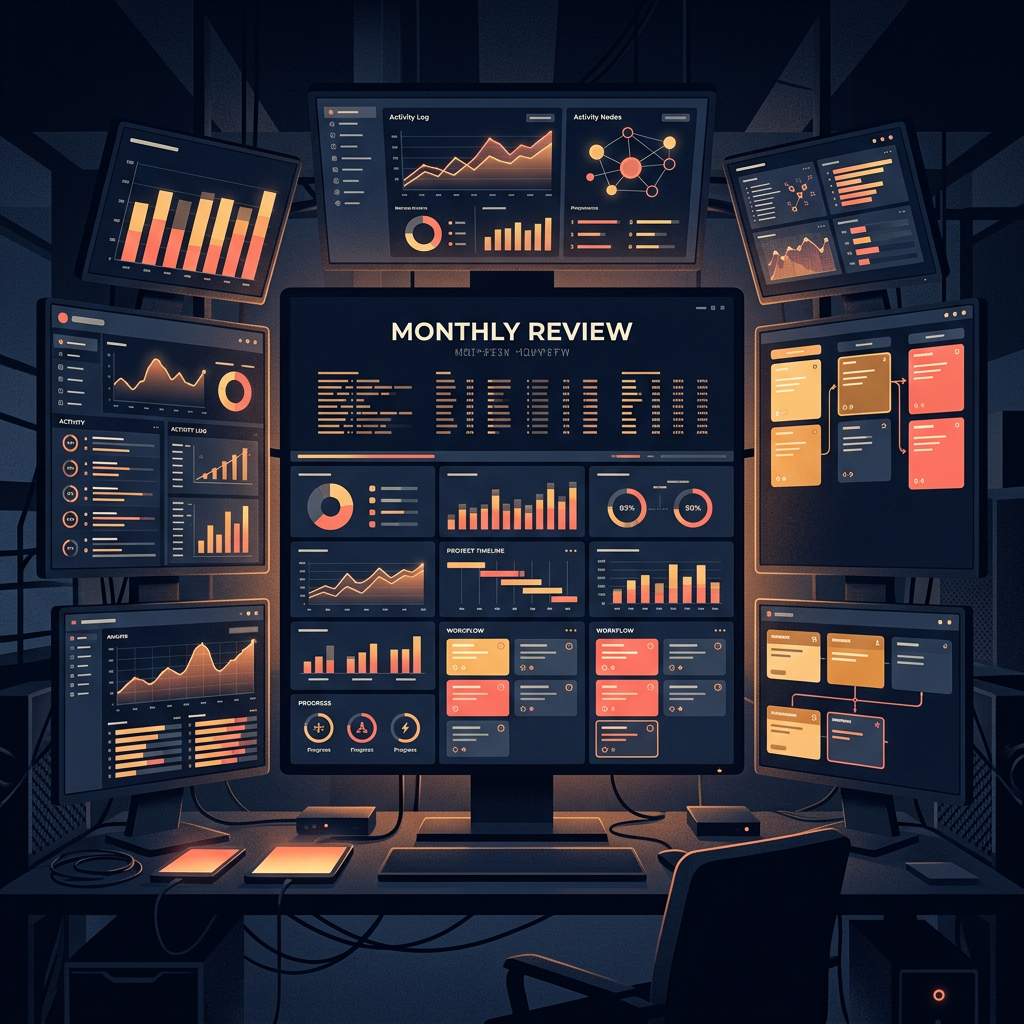
The Dashboard as Command Centre
One of the things I built early was a private dashboard page on the site itself.
It shows: total posts by category, newsletter subscriber count, Gumroad revenue, Google Search Console performance, Bing AI citation counts, background task progress, infrastructure status, the content pipeline, the AU company profile queue, and the last 20 published posts.
It auto-updates every night.
I check it at the start of each session and know the state of the whole operation in 30 seconds. No Slack. No standups. No status meetings.
That’s not magic. It’s just information architecture. The data exists — GSC API, WordPress API, MailerLite API, a state JSON file. The dashboard pulls it together and shows it clearly.
But the effect is real. I can make better decisions faster because I’m never starting from zero.
What This Means for the Industry
A former colleague runs a business with a dedicated team focused on content and service delivery. Real people, real effort, real investment.
A single person on a career break, working with AI, produced something he considered better.
I’m not saying that to be smug. I’m saying it because it tells you something important about where we are right now.
The constraint used to be labour. Content took people. Maintenance took people. Research took people. Systems took people.
Those constraints haven’t disappeared — but they’ve shifted dramatically. A single person who understands what they’re building, who structures their AI tools correctly, and who builds agentic infrastructure around their work can now match or beat larger teams on output and quality.
The new constraint is design. Can you design the system well enough that it does the right things autonomously? Can you build the memory structures so context doesn’t get lost? Can you write the crons that run the tasks you’d otherwise forget?
That’s a different skill set than managing a team. In some ways it’s harder. In others it’s much faster.
What This Isn’t
This isn’t a story about AI replacing people.
Claw doesn’t make strategic decisions. It doesn’t know that an off the cuff acquisition comment is worth sitting with for a few weeks before responding. It doesn’t know that someone’s AI startup is enterprise-focused and not worth a profile yet. It doesn’t know when to push and when to wait.
I do those things.
What AI does is remove the friction between decisions and execution. I decide to write a comparison post. Claw drafts, audits for AI writing patterns, adds Rank Math meta, pulls a featured image from Unsplash, formats the tables with the correct style, publishes it, updates the dashboard, and adds it to the relevant guide page.
That used to take me two hours. Now it takes twenty minutes of oversight, if that.
The output went up. The time went down. The quality, if anything, improved because the system enforces standards I’d sometimes cut corners on.
The Practical Bit
If you want to build something like this, here’s what actually matters:
Memory architecture first. If your AI can’t remember what you built last week, you’ll repeat yourself constantly. Write things down. Create project files. Build a dashboard. The AI is only as useful as the context you give it.
Automate the boring stuff early. Every task you do manually more than twice should be a cron job. Broken links, alt text, internal links, post count updates — these are all automatable. Do them once manually, then write the script.
Build standards into the system. Table styling, meta descriptions, footer links, featured images — if these have a standard, the system can enforce it. Document the standard. Give the AI the standard. Stop enforcing it manually.
Treat it like infrastructure, not a tool. A hammer is a tool. You pick it up when you need it and put it down when you’re done. An agentic system is infrastructure — it runs whether you’re watching or not. Design it that way.
Where This Goes
I don’t know what comes next for SmallBizAI.au. I don’t know if it becomes something bigger. I don’t know if the newsletter hits 5,000 subscribers by the end of 2026.
What I do know is that the model works. One person, the right infrastructure, and a clear focus on what actually matters — in this case, Australian AI content for small businesses — can build something real.
The team-of-eight comparison isn’t the point. The point is that the tools exist now for one person to do what used to require a team. That changes what’s possible for solo founders, career-breakers, side projects, and small businesses.
Most people haven’t figured that out yet.
Australian Boards Don’t Understand AI. Here’s Why That’s A Problem For All Of Us.
Posted: April 21, 2026 Filed under: Geek, Personal, smallbizai.au | Tags: ai, artificial-intelligence, chatgpt, technology, writing 3 Comments
I’ve spent 40 years in technology. Starting at Aspect Computing in the 80s as a graduate, then 22 years at Microsoft both in Australia and Seattle, 4 years at Telstra, and finally 6 years at AWS covering Australia and APJ. I’ve sat in boardrooms, executive briefings, and strategy sessions across Australia, the US, and the Asia-Pacific region.
And I’ll tell you what I’ve noticed: the people making technology decisions at most Australian companies often understand finance, law, and general management very well. They understand technology considerably less well.
New research from Queensland University of Technology has put numbers to something I’ve experienced firsthand. Out of the 500 largest ASX-listed companies, more than half have zero directors with STEM expertise. Over 15 years — covering smartphones, cloud, and now generative AI — that number moved from 8% to 13%. Meanwhile, accountants, bankers and lawyers still hold 42% of board seats.
I don’t think these are bad directors. Many are excellent at what they do. But technology is no longer a back-office function. It’s strategy. And you can’t set strategy for something you don’t understand.
What I saw at Microsoft and AWS
At Microsoft, I spent years as a technical evangelist — explaining technology to businesses, developers, and yes, executives. The best executive conversations I had were with people who had at least some technical background. They asked better questions. They made faster decisions. They weren’t paralysed by the fear of making the wrong choice because they didn’t understand the options.
At AWS, I ran teams focused on helping Australian organisations adopt cloud and AI. Again: the organisations that moved fastest had at least one person close to the top who genuinely understood what they were adopting. Not necessarily an engineer — but someone who had shipped software, run a tech team, or built something with technology.
A former colleague of mine who focused specifically on AI governance and board-level education at AWS put it well: boards tend to either dismiss AI as an IT problem or panic about it as an existential threat. Very few engage with it as what it actually is — a general-purpose capability that changes what’s possible across every function of the business.
Why this is urgent now
The QUT research only goes to 2022. AI as we know it today — ChatGPT, Claude, Copilot, Gemini — arrived after that. The urgency has increased dramatically since then.
ASIC has told Australian boards that cybersecurity is their responsibility, not the IT department’s. AI brings similar responsibilities: data privacy, algorithmic bias, liability when AI systems make mistakes, regulatory compliance under an evolving Privacy Act.
The Australian government signed an MOU with Anthropic in April 2026 — the first arrangement under the National AI Plan. Billions are flowing into data centres. Anthropic is opening a Sydney office. The investment appetite is real.
But investment without governance is how you get expensive technology initiatives that deliver nothing, or worse, that create serious legal and reputational risk.
The question I keep asking myself
I’m on a career break right now. Building SmallBizAI.au — a practical guide to AI for Australian small business owners. It’s been a fascinating experiment in what one person can build with the right AI tools and infrastructure.
But the boards research made me think about what’s next. Not just for me personally — though if you’re looking for someone who’s spent 40 years in technology, led teams across Microsoft, Telstra and AWS, and is now building AI-native products, I’m worth a conversation. But more broadly: what does Australia lose when the people overseeing our biggest companies don’t understand the most important technology shift of our lifetimes?
The research has an answer. Companies with more STEM expertise on their boards invest more in innovation and are valued more highly. That held even in low-tech industries. The boardroom gap isn’t just a governance problem. It’s a competitiveness problem.
What good looks like
I’m not arguing every board needs a software engineer. I’m arguing boards need at least one person who has operated at the intersection of technology and business — who can ask the right questions, interrogate vendor claims, understand the real risks, and push management to move faster when the opportunity is clear.
That person exists in Australia. There are thousands of us — people who came up through technology, moved into leadership, and understand both sides. We’re not all in boardrooms. Some of us are on career breaks building websites about AI for small business owners.
That might need to change.
Sources
- Elms, N. & Weerasinghe, A. (2025). STEM expertise on Australian ASX 500 boards, 2007–2022. Journal of Accounting Literature. doi:10.1108/JAL-07-2025-0373
- StartupDaily: The weird thing about Australian boards is how few directors have tech expertise in the AI age
- 2025 Watermark Board Diversity Index — AICD
- Australian Government MOU with Anthropic